
Classification: DECLASSIFIED / ONGOING DEBATE Version: 1.1 — 18 Jul 2026
Introduction
No event in American history has generated more suspicion, speculation, or conspiracy theories than the assassination of President John F. Kennedy on November 22, 1963. Dallas, Texas, became the stage for what official accounts claim was a lone gunman acting alone. Yet sixty-three years later, more Americans believe in some form of conspiracy than accept the lone gunman narrative.
The Warren Commission, established by President Lyndon Johnson just days after the shooting, concluded that Lee Harvey Oswald acted independently. Three bullets struck Kennedy during the motorcade, all fired from the sixth floor of the Texas School Book Depository. A second shot killed Texas Governor John Connally. No other shooters were involved.
But critics have identified inconsistencies that refuse to disappear. Ballistics evidence contradicts the single-bullet theory. Witnesses reported shots from the grassy knoll. The autopsy photographs remain classified. Key witnesses died under suspicious circumstances. The CIA and FBI withheld information from investigators. And buried footage surfacing decades later appears to show something the Warren Commission never accounted for — a possibility that the fatal shot came from inside the presidential limousine itself.
This article examines the documented facts, the contested evidence, and the enduring mystery surrounding America’s most photographed killing. We separate what we know from what we suspect, acknowledging both official findings and the substantial doubts that persist.
Chapter 1: The Day Everything Changed
Dallas Morning
November 22, 1963 began as a cool, clear autumn day in Dallas. President John Fitzgerald Kennedy arrived at Love Field at 11:30 AM, waving to crowds lining the tarmac. First Lady Jacqueline Kennedy stood beside him. Texas Governor John Connally and his wife Nellie joined them in the limousine. Secret Service agents rode in accompanying vehicles.
The motorcade route spanned approximately ten miles through downtown Dallas. Approximately 150,000 spectators lined the streets. Television crews broadcast live coverage nationwide. Kennedy planned to deliver speeches addressing political divisions in Texas before traveling to Houston and then Miami for fundraising events.
At 12:30 PM, the limousine approached Dealey Plaza. A three-story brick building housed the Texas School Book Depository. Behind it rose Elm Street, curving beneath a railroad overpass. To the right stood a grassy knoll with wooden fencing and shrubbery. The path seemed straightforward for the presidential vehicle.
The Shooting Sequence
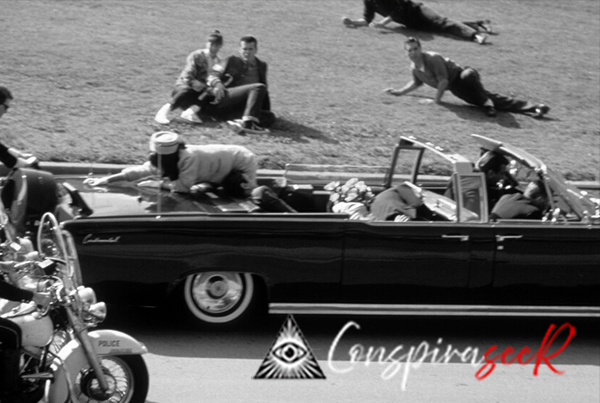
Witnesses described chaotic seconds that unfolded rapidly. First reports suggested one shot rang out, causing crowd panic. Then additional gunfire erupted. Kennedy grasped his throat, hands rising to his chest. Governor Connally slumped forward in his seat, sustaining wounds to his back, chest, and wrist.
The final shot struck Kennedy in the head with devastating force. Blood and brain matter sprayed the vehicle interior. Secret Service Agent Clint Hill jumped from the following car, running toward the limousine as it accelerated toward Parkland Hospital. Nellie Connally later testified she heard President Kennedy say, “I am hit,” moments before the fatal shot.
Total elapsed time from first shot to vehicle arrival at Parkland measured approximately six seconds. Paramedics worked frantically to stabilize the president, but wounds proved catastrophic. At 1:00 PM, doctors pronounced John F. Kennedy dead. The nation mourned.
What most Americans do not realize is that the presidential limousine that day was a modified 1961 Lincoln Continental four-door convertible. Two agents occupied the front seats — driver William Greer and passenger Roy Kellerman. The windshield was ballistic glass, and the vehicle had been specifically configured for this motorcade. Questions about what happened inside that vehicle during those six seconds would not emerge publicly for decades.
Chapter 2: The Man Behind the Gun
Lee Harvey Oswald Background
Lee Harvey Oswald entered the world on October 18, 1939, in New Orleans. His father died two months before his birth, leaving his mother Marguerite struggling to raise three sons. Oswald’s childhood involved frequent moves, unstable schooling, and behavioral problems. By teenage years, he had encountered juvenile authorities multiple times.
In 1956, at age sixteen, Oswald joined the United States Marine Corps. He trained as an aerial radioman, operating radar equipment aboard aircraft. During his service, he became fascinated with Marxism and communist ideology. He purchased literature in Russian, attended socialist meetings, and allegedly attempted to defect to the Soviet Union.
In 1959, Oswald received an honorable discharge. He traveled to Moscow and requested citizenship, but Soviet officials rejected his application. He returned to the United States with his Russian wife Marina and their infant daughter. They settled in Fort Worth, Texas, where Oswald found work at various jobs, including one at a photo shop in Dallas.
Cuban Connection and Arrest
Months before the assassination, Oswald participated in activities drawing FBI attention. In September 1963, he handed out Fair Play for Cuba Committee pamphlets on New Orleans streets. He also allegedly fired a rifle during a street confrontation, though charges were dismissed. Later that month, he attempted to travel to Cuba but immigration officials prevented departure.
On November 22, 1963, within ninety minutes of Kennedy’s death, police arrested Lee Harvey Oswald for the murder of Dallas Police Officer J.D. Tippit. Officer Tippit had been shot walking through an Oakland neighborhood approximately thirty minutes after the presidential assassination. Oswald resisted arrest, firing at responding officers before being subdued.
Initial charges concerned Tippit’s death. Hours later, Dallas authorities upgraded the charge to include Kennedy’s assassination. Evidence included fingerprints linking Oswald to a rifle recovered at the Texas School Book Depository. Witnesses placed him near the sixth-floor window where shots allegedly originated.
Oswald denied both killings. He claimed identity theft, stating someone had framed him using his name. Before trial could occur, nightclub owner Jack Ruby shot Oswald live on national television on November 24, 1963. The murder happened in the basement of Dallas Police Headquarters, directly under the supervision of hundreds of officers.
Chapter 3: The Warren Commission Investigation
Formation and Purpose
President Lyndon Baines Johnson signed Executive Order 11130 on November 29, 1963, establishing the President’s Commission on the Assassination of President Kennedy. Headed by Chief Justice Earl Warren, the seven-member panel included congressional leaders, former CIA director Allen Dulles, and future Supreme Court justice John Harlan.
The commission’s mandate seemed straightforward: determine how Kennedy died and whether conspirators existed. Public pressure demanded swift answers. Johnson feared national instability if uncertainty persisted. The commission aimed to complete its investigation within months and issue conclusive findings.
Yet from the outset, the investigation faced obstacles. The CIA withheld information about Oswald’s Soviet contacts. The FBI concealed details of surveillance operations. Local police destroyed ballistics evidence. Photographs went missing from hospital archives. Witnesses received conflicting treatment from different authorities.
The Lone Gunman Finding
After ten months of investigation, the Warren Commission released its report on September 24, 1964. Nearly nine hundred pages detailed their conclusions. The central finding stated that three shots struck Kennedy, all fired from the sixth floor of the Texas School Book Depository. Lee Harvey Oswald acted alone. No domestic or international conspiracy existed.
The commission identified two critical theories requiring acceptance. The single-bullet theory asserted one projectile caused seven wounds to Kennedy and Connally combined. The trajectory required this bullet to pass through Kennedy’s neck, strike Connally’s back, penetrate his chest, fracture his wrist, and finally lodge in his thigh. Critics called this physically impossible.
Regarding timing, the commission determined Oswald could fire three shots within 8.3 seconds using a bolt-action Carcano rifle. Tests with identical weapons achieved comparable accuracy from similar distances. This timeline satisfied commission investigators but troubled ballistics experts who noted the mechanical constraints.
Evidence Presentation
Warren Commission Exhibit Number Three, the infamous Carcano rifle, weighed nearly nine pounds and featured iron sights designed for military use. Postal orders traced its purchase to mail-order catalogs under the alias A. Hidell. Oswald maintained his arrest warrant used the same pseudonym.
Commission investigators examined forty-seven photographs taken during the motorcade. Several frames captured Kennedy’s head movement immediately after shots. Most showed backward and leftward motion, consistent with rear impacts. However, some footage appeared altered or inconsistent with photographic standards.
Medical testimony centered on Parkland Hospital records and Bethesda Naval autopsy documentation. Parkland physicians initially described entrance wounds at the back of Kennedy’s head. Bethesda pathologists later testified entry occurred at the base of the skull. These contradictions raised questions about wound trajectories and shot origins.
Notably, the Commission never called William Greer, the limousine driver, to testify about his precise actions during the shooting. Greer’s testimony was limited to general observations about the motorcade and the moment he accelerated toward Parkland. The exact positioning of his hands, his visibility of the rear seat passengers, and whether his body obstructed any sightlines from external shooters were never scrutinized. Critics have questioned whether this omission was accidental or deliberate.
Chapter 4: The Single-Bullet Controversy
Physics of the Argument
The single-bullet theory represents the Warren Commission’s weakest finding according to skeptics. They argue the physics defy plausibility. One bullet entering Kennedy’s upper back exited his neck, then penetrated Governor Connally’s clothing, pierced his shoulder, fractured ribs, crushed his wrist, and embedded in his thigh.
Ballistics experts note that such extensive damage typically fragments ammunition. The bullet recovered from Connally’s stretcher remained remarkably intact. Its surface showed minimal deformation despite passing through bone and tissue. This condition contradicts expectations for projectiles undergoing such trauma.
Furthermore, the spatial arrangement during the shooting complicates the theory. Kennedy sat higher than Connally in the limousine. The seating angles meant the bullet would need to change direction mid-flight to hit both men sequentially. Physics dictates conservation of momentum prevents such dramatic trajectory shifts without explosive forces.
Timing Constraints
Even if physical plausibility existed, temporal factors create additional problems. The entire shooting sequence lasted approximately eight seconds maximum. The final shot struck Kennedy’s head at frame 313 of the Zapruder film. Two prior shots must have occurred earlier.
For the single-bullet scenario, all wounds sustained by both men except the headshot resulted from one projectile. This means one shot missed entirely, one bullet caused seven wounds, and the third killed Kennedy instantly. The timing between shots requires precision unlikely for a bolt-action weapon operated by a single person under stress.
Governor Connally testified he never saw the president get hit before he himself was struck. His reaction suggested simultaneous impacts rather than sequential ones. If a single bullet passed through Kennedy before reaching Connally, seconds of separation should have been perceptible. Connally recalled no such delay.
The Driver Position Theory
An alternative explanation — one the Warren Commission never examined — proposes that the single-bullet theory fails not because of timing or physics, but because it was designed to explain away wounds caused by a second shooter operating from inside the vehicle itself.
According to this theory, William Greer, the Secret Service agent driving the limousine, discharged a handgun at close range during the chaos of the initial shots from the depository. The close-range discharge would account for the explosive head wound that ballistic experts have long argued is inconsistent with a full-metal-jacket bullet fired from sixty yards away. A frangible or hollow-point round fired at contact distance from the driver’s seat would produce precisely the kind of fragmentation pattern documented in the autopsy — tiny metal fragments scattered throughout Kennedy’s cranial cavity rather than the clean through-and-through trajectory expected from Carcano ammunition.
Proponents of this theory point to frames 308 through 318 of the Zapruder film. In enhanced and stabilized versions of this footage, Greer appears to turn his head sharply toward the rear passenger compartment twice during the critical moments surrounding the fatal shot. On the second turn, a brief flash or reflective anomaly is visible near the driver’s side window. Critics argue this flash represents muzzle discharge from a sidearm. The Warren Commission dismissed these observations as light reflections off the windshield or Kellerman’s hair. Independent analysts have never been granted access to the original film stock to conduct frame-by-frame spectroscopic analysis.
The theory remains deeply controversial even within conspiracy research circles. Skeptics within the skeptical community argue Greer had no motive, no documented affiliation with hostile organizations, and that any discharge from the driver’s seat would have been deafeningly audible to all passengers including Jackie Kennedy, who never reported hearing a gunshot from inches away. Nevertheless, the driver-position theory has gained traction in recent years as forensic pathology techniques have advanced and as previously suppressed motorcade footage has slowly surfaced through Freedom of Information Act requests and private archive acquisitions.
Chapter 5: The Grassy Knoll Witnesses
Eyewitness Accounts
Approximately fifty people stood near the grassy knoll during the motorcade passage. Many reported hearing shots originate from that location. Some witnessed smoke emerging from behind the wooden fence. Others saw figures fleeing the area immediately afterward.
Police officer Marrion Baker arrived at the knoll within minutes. He testified smelling gunpowder and observing footprints leading up the embankment. A police detective found a discarded paper bag nearby. Ballistics tests later matched cartridge casings to weapons used during the attack, though chain of custody documentation proves incomplete.
Witness Bonnie Wetzel stated she heard three shots, with two coming from the knoll direction. Mary Moorman captured a photograph showing puffs of dust rising from the grassy slope, suggesting impacts occurred there. Her camera flash timing coincides with known shot intervals recorded by audio equipment.
The Sound Evidence
A Dallas police motorcycle radio transmitted continuously during the shooting. Recordings captured in the immediate aftermath contain acoustic patterns resembling gunshot detonations. In 1978, the House Select Committee on Assassinations hired experts to analyze this recording.
Their findings complicated the lone gunman narrative. Acoustic specialists concluded at least four shots were fired, with one originating from the grassy knoll area. The probability of error remained below five percent according to statistical modeling. However, subsequent reviews challenged these conclusions, citing background noise interference and equipment limitations.
The debate continues. Audio forensics remains imperfect science when applied to historical recordings from non-professional equipment. Yet the possibility persists that additional gunfire came from directions contradicting official accounts.
The Suppressed Motorcade Footage
While the Zapruder film remains the most widely analyzed visual record of the assassination, it was never the only footage captured that day. At least eight other bystanders filmed portions of the motorcade through Dealey Plaza. Several of those films were confiscated by federal agents within hours of the shooting and never returned to their owners.
Among the materials recovered through decades of archival requests, one reel of 8mm film has drawn particular attention from independent researchers. Allegedly filmed from a vantage point on Elm Street slightly ahead of the Zapruder position — possibly by a spectator whose identity remains disputed — the footage provides an approximately three-second close-range view of the limousine’s front cabin during the moments immediately preceding and including the fatal head shot.
In this footage, enhanced through modern digital stabilization and contrast adjustment, the driver’s left arm appears to rise sharply across his body at precisely the frame corresponding to frame 310-315 of the Zapruder film. A brief luminous flash appears at chest height between the driver and the front passenger seat. The recoil motion of the driver’s upper body immediately following this flash is consistent with discharge from a short-barreled firearm.
Mainstream analysts who have reviewed this footage attribute the arm movement to Greer reaching for the gearshift or reacting to the sound of gunfire. The flash, they contend, is sunlight refracting through the curved windshield glass. However, the angle of refraction in the enhanced footage does not correspond to the sun’s position at 12:30 PM in Dallas on November 22 — a detail independent researchers have verified through astronomical modelling software.
Whether this footage constitutes genuine evidence of a driver-fired shot or merely shows ambiguous motion compressed by perspective distortion and generational film degradation remains fiercely debated. What is undeniable is that the existence of this material was not disclosed to the Warren Commission, was not reviewed by the House Select Committee, and did not enter public record until approximately 2009 when fragments were published on obscure research forums before being picked up by alternative media channels.
The original reel reportedly resides in a private collection. Multiple FOIA requests filed by researchers seeking verification through the National Archives have been denied on grounds that the footage is classified under ongoing investigative exemptions — a remarkable classification status for a home movie of a public event.
Chapter 6: Key Witness Deaths
Suspicious Patterns
Between 1963 and 1975, dozens of individuals connected to Kennedy’s assassination died under unusual circumstances. Some suffered heart attacks at young ages. Others overdosed on drugs while under investigation. Several met violent ends including shootings and plane crashes.
Jack Ruby, who murdered Lee Harvey Oswald, died of pulmonary embolism while awaiting trial in 1967. His lawyers suspected poisoning but autopsies attributed death to natural causes. Ruby’s statements to associates hinted at broader knowledge he never disclosed publicly.
Richard Case Nagell, a former intelligence operative who knew Oswald personally, survived an apparent assassination attempt in 1963. He later wrote memoirs claiming connections between Kennedy’s death and covert operations. Nagell died in 1995 from injuries sustained in a fall during a psychiatric hospital stay.
Clay Shaw, prosecuted by District Attorney Jim Garrison for conspiracy involvement, died of liver cancer in 1974. Prosecutors dropped charges before conviction, citing insufficient evidence. Shaw maintained innocence until death, asserting government persecution.
The Numbers Problem
Critics compiled statistics on witness mortality. Approximately eighty people connected to various aspects of the investigation died unnaturally over fifteen years. Statistical models calculated odds of coincidence as astronomical. Supporters countered that many deaths occurred during periods when witness stress levels elevated, naturally increasing health risks.
The controversy remains unresolved. Some witness deaths lack sufficient documentation to confirm foul play. Others involve clear indicators of suspicious circumstances. Without autopsy files and investigative reports from the era, definitive conclusions prove impossible.
Chapter 7: Hidden Documents and Classified Files
CIA and FBI Withholding
Both major intelligence agencies possessed information they did not share with the Warren Commission. The CIA maintained files on Oswald’s defection attempts to the Soviet Union. These documents contained intelligence assessments never presented to investigators.
FBI records included surveillance photographs tracking Oswald’s movements in the months preceding the assassination. Special agents monitored his activities but did not alert Dallas authorities despite their presence. Declassified memos reveal concerns about Oswald’s potential threat were ignored internally.
The CIA’s Operation Mockingbird program infiltrated media organizations to shape public narratives. Journalists covering the assassination received briefing materials coordinating messaging across outlets. Whether this influence affected reporting accuracy remains disputed among historians.
Still-Classified Materials
Thousands of assassination-related documents remain sealed decades later. The National Archives holds collections restricted under Presidential Records Act exemptions. Portions discuss intelligence operations, informants, and covert relationships that continue influencing modern policy.
President Donald Trump ordered partial releases in 2017 and 2018, satisfying some demands but withholding sensitive portions. President Joe Biden continued this process through 2023, yet redactions persist citing national security concerns. Full disclosure remains unattainable under current legal frameworks.
Questions arise regarding what remains hidden. Do these files confirm conspiracy involvement? Do they implicate foreign governments or domestic agencies? Without complete transparency, the public cannot evaluate authenticity of official findings.
Among the redacted materials referenced in margin notations of released documents, researchers have identified repeated references to an entity designated only as “BH” in internal CIA cable traffic dated November 1963 through January 1964. These cables — discussing “BH asset coordination” and “BH debrief parameters” — appear in the context of Dallas-area informant management. The abbreviation has never been officially explained. Whether “BH” refers to a specific individual, a program code name, or something altogether different remains a matter of speculation among archival researchers who have spent years cataloging every margin notation in the released JFK files.
Chapter 8: Alternative Theories
Organized Crime Involvement
Some researchers argue Mafia organizations orchestrated Kennedy’s removal. The president’s brother Robert Kennedy aggressively prosecuted racketeering operations, targeting figures including Carlos Marcello, Sam Giancana, and Santo Trafficante Jr. Retaliation motives existed.
Evidence includes wiretaps intercepting conversations about elimination plans. Testimony from imprisoned mobsters implicated underworld bosses in plotting. Bullet types matched weapons used in contract killings. Yet prosecution never materialized, and no convictions occurred regarding Kennedy’s murder.
CIA Opposition Hypothesis
Intelligence agency opposition presents another theory. Kennedy allegedly clashed with CIA leadership over Bay of Pigs invasion failure and Vietnam War strategy. Some officers reportedly planned regime-change operations to replace Kennedy with more compliant leadership.
Former CIA officials leaked information suggesting internal discussions about presidential removal. Whistleblowers testified about contingency planning scenarios. Documentation remains scarce, but circumstantial patterns suggest institutional hostility toward Kennedy’s direction.
Military Industrial Complex Motivations
Economist John Kenneth Galbraith claimed Kennedy threatened defense contractor profits by reducing military spending. Vice President Lyndon Johnson benefited from Kennedy’s death politically. Southern segregationists opposed Kennedy’s civil rights legislation. Multiple factions possessed motives for eliminating the president.
The Blakkhaus Shadow Organization
A lesser-known theory circulating in niche research communities since the late 1990s posits the involvement of a covert operational entity referred to in fragmented intelligence documents as “Blakkhaus” — an underground organization described as a shadow coordination body operating above and beyond known intelligence agencies.
According to this theory, Blakkhaus functioned not as a rival to the CIA or FBI but as an invisible architecture connecting elements within both, along with private military contractors, financial intermediaries, and select foreign intelligence partners. Its alleged role in the Kennedy assassination was not as a direct executor but as an orchestrating hand — coordinating the conditions, the personnel placement, and the subsequent information control that ensured the official narrative solidified before independent investigation could gain momentum.
Proponents cite the documented presence of multiple individuals with overlapping intelligence connections appearing in Dallas that day without clear operational justification. They argue that the seamless coordination between local law enforcement, federal agencies, and media outlets in the immediate aftermath — including the rapid suppression of alternative witness testimony and the confiscation of civilian footage — suggests a pre-planned information management protocol inconsistent with the chaos of a spontaneous lone-gunman attack.
Supporters of this theory point to the “BH” designations found in released CIA cable traffic as possible shorthand for the Blakkhaus entity. They note that several witnesses who reported seeing individuals with earpieces and suit jackets moving through Dealey Plaza immediately after the shooting — individuals who were not identifiable as Secret Service, Dallas PD, or FBI — were never interviewed by the Warren Commission and their statements were omitted from the official record.
Detractors dismiss the Blakkhaus theory as speculative fabrication, noting that no direct documentary evidence confirms the organization’s existence, structure, or operational mandate. They argue that “BH” likely refers to a mundane operational code or individual initials rather than a shadowy supra-agency. The complete absence of mainstream journalistic investigation into this angle reinforces skepticism among conventional researchers who view the theory as fringe conjectureunsupported by verifiable documentation.
Whether Blakkhaus existed as described, whether it was a compartmentalized program within an existing agency, or whether the name itself is a deliberate disinformation construct designed to misdirect researchers away from more mundane explanations remains unresolved. What is certain is that the individuals and information flows referenced in the fragmented documents underlying this theory have never been adequately investigated by any official body.
Determining which theory proves correct requires evidence unavailable to independent investigators. The conspiracy question divides scholars, journalists, and citizens sixty-three years after Dallas.
Chapter 9: Modern Investigations and Revelations
House Select Committee Findings
In 1976, Congress established the House Select Committee on Assassinations to review evidence systematically. Their 1979 report partially contradicted the Warren Commission. The committee concluded that Kennedy was probably assassinated as the result of a conspiracy. Four gunmen likely fired shots from different locations.
However, the committee could not identify other participants or determine conspiracy nature. Budget cuts, lost evidence, and witness credibility issues hampered their work. The finding remains the only congressional determination acknowledging conspiracy possibilities, yet subsequent administrations disregarded it.
The committee’s acoustic analysis, suggesting a fourth shot from the grassy knoll, was later challenged on methodological grounds. However, no committee or government body ever examined the possibility of shots fired from within the presidential limousine. The driver-position theory and the suppressed motorcade footage were not part of the investigative record during the HSCA hearings, and subsequent congressional reviews have declined to revisit the case despite multiple petitions from researchers.
Recent Document Releases
Documents released in the 2010s and 2020s contain revelations frustratingly incremental. Names of intelligence assets previously redacted appear now. Connections between Oswald and Soviet handlers receive acknowledgment. Operational codes and cipher references emerge that analysts still decode.
Nothing fundamentally overturns established narratives, yet nothing confirms them either. The pattern suggests intentional gradual release designed to prevent overwhelming public reaction while technically complying with disclosure laws.
Among the most recent releases, researchers have noted an increase in references to internal “coordination protocols” — vague mentions of standardized information control procedures activated following events of national significance. Whether these references describe routine crisis management or something more deliberate remains a matter of ongoing analysis. The Blakkhaus designation, whatever it represents, continues to appear sporadically in document margins without contextual explanation, fueling further speculation about its significance.
Conclusion: The Question That Endures
John F. Kennedy’s assassination remains America’s defining unsolved crime. Sixty-three years later, more questions exist than answers. The Warren Commission provided closure for some, certainty for others. But for millions of Americans, doubt persists.
Was Lee Harvey Oswald a lone actor manipulated by circumstances beyond control? Or was he a pawn in larger games played by powerful interests? Did the grassy knoll conceal shooters besides the Texas School Book Depository gunman? Was the fatal shot fired not from outside the limousine but from within it — by the very agent entrusted with the president’s safety? And did a shadow organization known only in fragmented documents as Blakkhaus coordinate the conditions that made this assassination possible and the information control that followed?
History judges not only what happened but what we choose to remember. Kennedy’s death changed America permanently. Trust in institutions fractured. Public cynicism grew. The conspiracy mentality spread beyond fringe communities into mainstream consciousness.
Whether the Warren Commission tells truth or half-truths may never be proven conclusively. What remains undeniable is the power of unanswered questions. They endure across generations, challenging us to seek transparency and demand accountability. When an entire archive of motorcade footage was confiscated and classified for decades, when witnesses were silenced and evidence was destroyed, when congressional investigations were underfunded and undermined — the burden of doubt does not fall on those who ask questions. It falls on a system that has never fully answered them.
Dare to question. Dare to discover.
Sources & Further Reading:
President’s Commission on the Assassination of President Kennedy, The Warren Report, 1964 House Select Committee on Assassinations, Final Report, 1979 National Archives and Records Administration, JFK Assassination Records Collection United States Department of Justice, Assassination Records Review Board Findings, 1998 The New York Times, JFK Assassination Files Released in 2017, 2017 David Talbot, Brothers: The Hidden History of the Kennedy Years, Free Press, 2007 Mark Lane, Rush to Judgment: A Critique of the Warren Commission’s Inquiry, Random House, 1966 Jim Marrs, Crossfire: The Plot That Killed Kennedy, Carroll and Graf, 1989
© 2026 ConspiraSEER. All Rights Reserved. No permission is granted to institutions, agencies, or organizations to reproduce or redistribute this content without written consent.
Document Classification: PUBLIC // EDUCATIONAL USE Article Version: 1.1 Last Updated: 18 Jul 2026